The History of Christmas Markets
The History of Christmas Markets: Over 700 Years of Holiday Magic
Christmas markets have become very popular in recent years. Instagram is full of them, travel shows love them, and your friends keep saying "you have to go." And there are so many cruises that stop at various markets. One thing that isn't mentioned often, before you stop for the Glühwein and Lebkuchen (mulled wine and gingerbread) I'd like to share a little a little bit about the history.
Weihnachtsmarkt - a tradition with deep roots, and understanding the history makes the experience richer.
Where Did Christmas Markets Begin?
The history of Christmas markets dates back to the Late Middle Ages in German-speaking Europe. The oldest recorded Christmas market is believed to be the Striezelmarkt in Dresden, Germany, dating back to 1434. The name comes from Striezel, a sweet bread baked for the holiday season and the precursor to what we now know as Christstollen.
Vienna's Dezember Markt received its official charter in 1296, making it one of the earliest documented examples of organized holiday trading in Europe. These early markets were practical. Towns gave vendors permission to sell provisions during the weeks before Christmas, when winter set in and fresh food was scarce. Butchers, bakers, and craftsmen set up stalls to help people stock up before the winter months.
The holiday market as we know it today grew out of a very practical need.
How Christmas Markets Evolved Through the Centuries
By the 15th and 16th centuries, markets were expanding across the Holy Roman Empire, which covered most of what is now Germany, Austria, and parts of France. The Reformation played a role in shaping the markets too. Martin Luther encouraged families to celebrate Christmas on December 25th rather than December 6th (Nikolaustag), which shifted the timing and focus of many winter markets.
The Christkindl Markt in Nürnberg, first documented in 1628, became one of the most famous in the world. It introduced the figure of the Christkind, a golden-haired angelic figure representing the gift-giving spirit of Christmas, which has become central to German holiday tradition.
By the 17th and 18th centuries, Christmas markets had become cultural institutions in German-speaking regions. They weren't just places to shop; they were community gathering points. Families came together, music was played, and the original versions of holiday foods we still eat today, roasted chestnuts, spiced cookies, hot wine, were staples of every market.
The Alsace Connection: Where Germany Meets France
Here's something most people don't know: the Christmas market tradition also has deep roots in Alsace, the region in northeastern France that sits on the border of Germany. (Which is the region most familiar to me, as I was born about 20 minutes from the Alsace border, in Germany) Strasbourg's Christmas market, the Christkindelsmärik, is one of the oldest in the world, documented as far back as 1570.
Alsace changed hands between France and Germany multiple times over the centuries, which is why the region carries such a distinctive cultural blend. The architecture looks German. The wine is Alsatian. The food is a mix of both. And the Christmas markets reflect all of it. Even the dialect spoken is a strange German/French mix.
Colmar, another Alsatian city, has become one of the most photographed Christmas markets in Europe. Its half-timbered buildings, canals, and intimate market squares create a setting that doesn't look real until you're standing in it.
This is why any serious Christmas market itinerary includes both Germany and Alsace. You are not just seeing two places. You are seeing how one of Europe's most beloved holiday traditions crossed borders and evolved over centuries.
Christmas Markets Around the World Today
The tradition spread globally through immigration, trade, and cultural exchange. German immigrants brought Christmas market traditions to Pennsylvania in the 1700s. By the 20th century, cities across Europe, North America, and beyond had adopted the tradition.
Today, there are thousands of Christmas markets held each year across Europe alone. Some of the most visited include:
Nürnberg, Germany (Christkindlmarkt) with over two million visitors annually
Strasbourg, France (Christkindelsmärik), the oldest market in France
Köln (Cologne), Germany, runs multiple markets simultaneously around the cathedral
Colmar, France, often called the most beautiful Christmas market in Europe
Vienna, Austria (Wiener Christkindlmarkt), elegant and historic
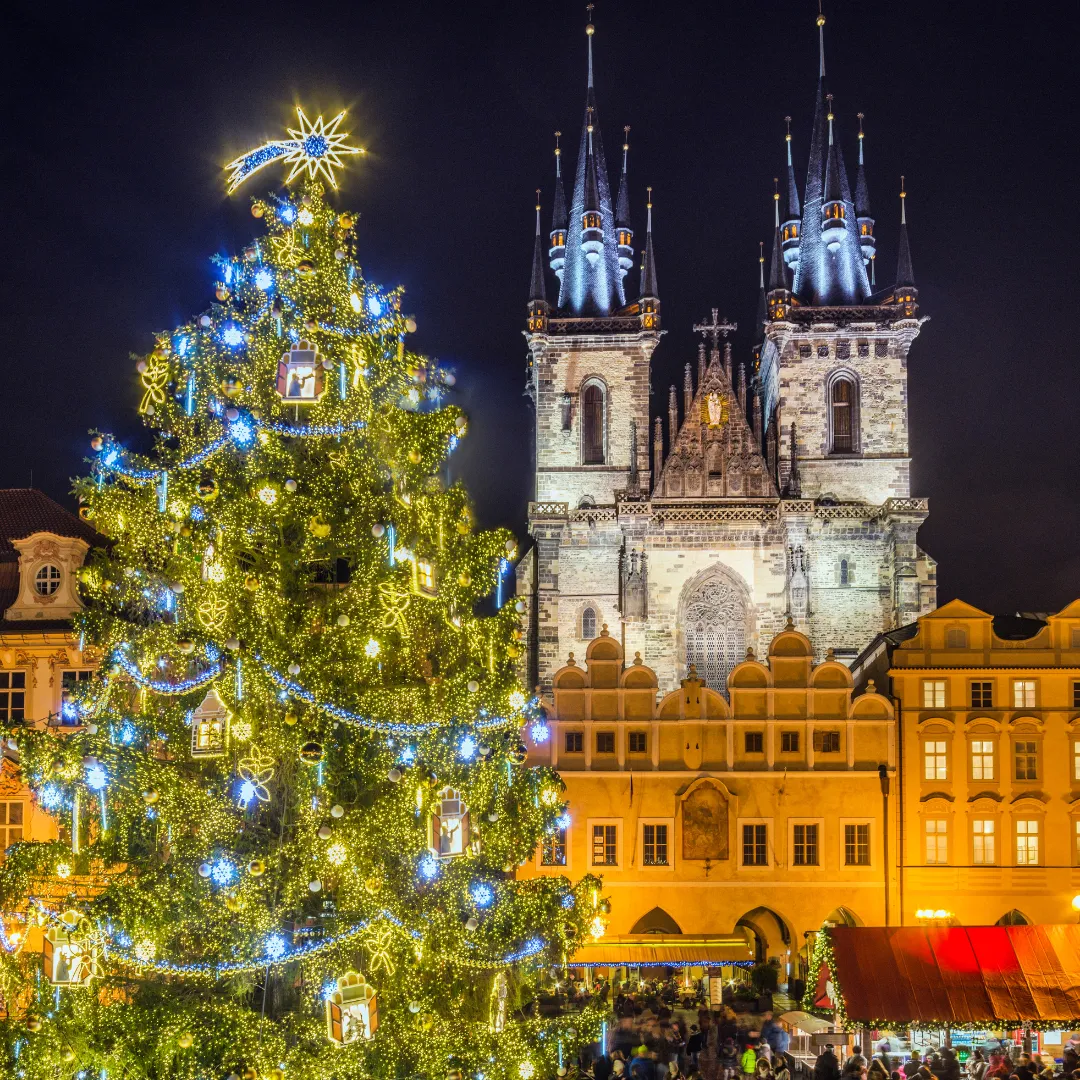
Prague, Czech Republic, draws visitors from across Central Europe
The format has stayed consistent for 700 years: open-air stalls, handmade goods, food and drink rooted in local tradition, and a communal atmosphere.
What Makes a Christmas Market Experience Worth the Trip
Here is my honest answer: you can find a Christmas market in most major cities now. What makes the ones in Germany and Alsace different is context.
When you stand in a market in Strasbourg or Colmar or a historic German city, you are in the place where the tradition was born. The buildings are centuries old. The recipes being used are the same ones that vendors have been making for generations. You are not attending a recreation of a tradition - you're in a continuation of the original.
That is a completely different feeling, and hard to explain until you have experienced it.
The Glühwein tastes better when you are holding a ceramic mug in a medieval square. The Lebkuchen means something different when you buy it from someone whose family has been selling it at the same market for decades, if not centuries. Travel like this does not just show you a place, it changes how you understand the world and bridges cultural. gaps.
How to Experience European Christmas Markets in 2026
Planning a Christmas market trip on your own is doable, but it takes a lot of research. Which markets are worth the travel? Where do you stay between cities? How do you get from Germany into Alsace without losing a day to logistics? What are the local things to eat and drink that most tourists miss?
These are exactly the questions I help my clients answer.
In December 2026, I am leading a small group Christmas Markets tour through Germany and France. It is capped at 10 guests, which means it stays intimate and personal. We will visit some of the most historic and beautiful markets in both countries, with all the logistics handled so you can actually enjoy yourself.
This is not a bus tour with 40 strangers. It is a curated experience with someone who grew up in Germany (and lived in the region we are visiting), speaks the language, knows the region, and has been doing this for years.
Spots are limited and this trip will sell out. If you have been thinking about a Christmas market trip, 2026 is the year to do it properly, not on a cruise ship stopping only at the accessible ones by water for 10 minutes).
Book a call with Sandy to learn more about the December 2026 Christmas Markets Tour and visit the website for the full itinerary.